Holistic Psychiatry is Excellent for ADHD: Here’s Why (2026)
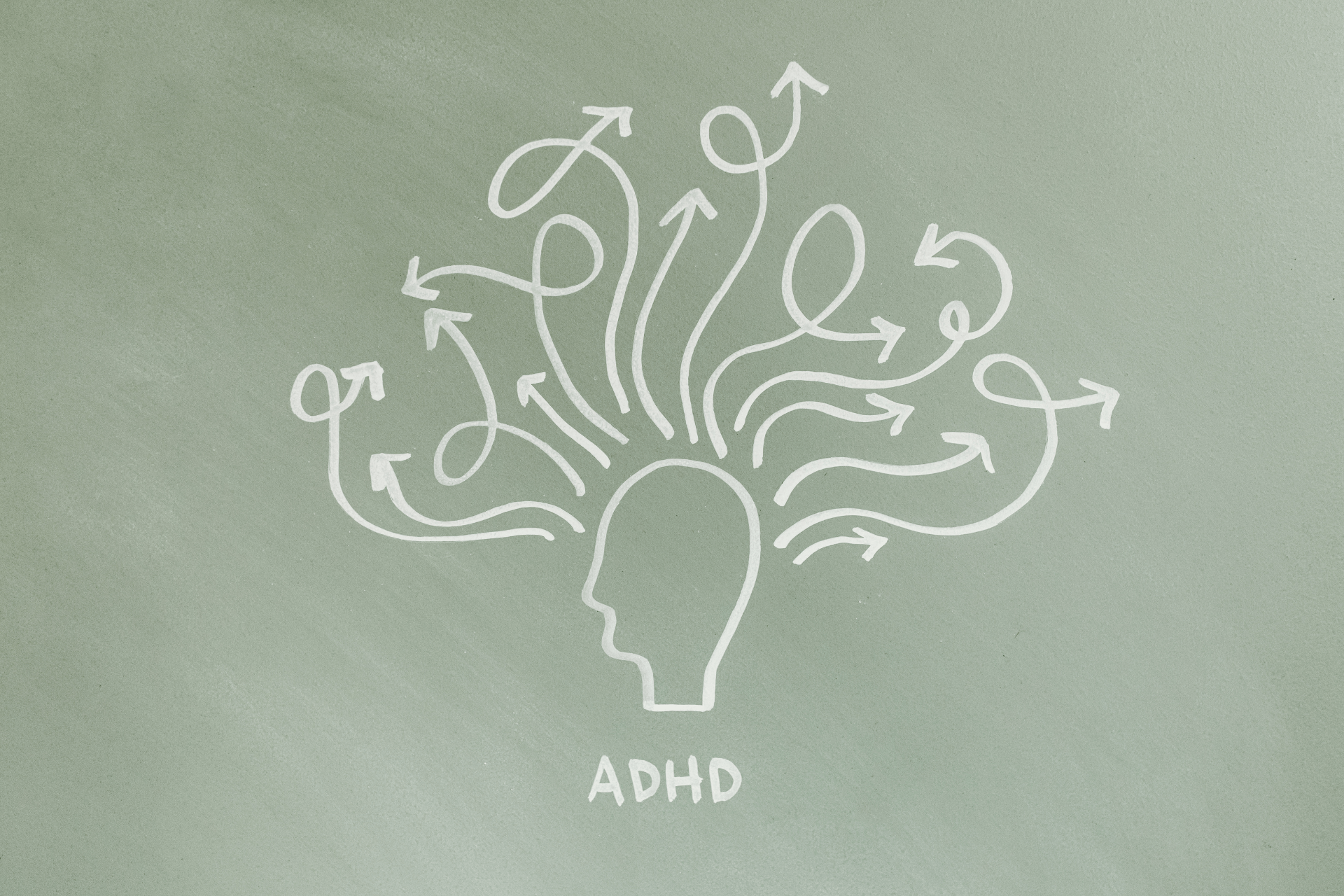
If you live with ADHD, you likely know the feeling of being capable and inconsistent at the same time. You can focus intensely when something captures your interest, yet routine tasks feel disproportionately difficult.
You may perform well professionally while privately struggling with organization, follow-through, or emotional regulation. Over time, this pattern creates frustration, self-doubt, and exhaustion. But there is a solution. Holistic Psychiatry is excellent for ADHD, and I’m here to explain why.
ADHD Is More Than a Dopamine Problem
ADHD is often described as a dopamine issue, and dopamine does play a central role in motivation and executive function. But reducing ADHD to a single neurotransmitter oversimplifies what is actually a complex systems pattern.
Attention does not operate independently of sleep, inflammation, stress hormones, trauma history, gut health, or life structure. When those systems are strained, attention becomes inconsistent.
ADHD Is An Individualized Experience
If you have read our article on how to manage ADHD without medication, you know that lifestyle and nervous system support meaningfully improve focus. Similarly, the difference between ADD and ADHD explains how attention patterns present differently across individuals.
These distinctions matter because ADHD is not one uniform experience. It is a spectrum of regulation patterns that require individualized care. Enter holistic psychiatry.
3 Core Focuses of Holistic Psychiatry for ADHD
Holistic psychiatry is excellent for ADHD because it recognizes this complexity. Rather than asking only how to increase focus, it asks what the brain and nervous system are responding to. Symptoms are not random; they are signals.
In holistic psychiatry, ADHD is viewed not as a character flaw or a willpower deficit, but as an expression of how multiple systems are interacting. Holistic psychiatry focuses on:
#1: A Broader Biological Evaluation
Holistic psychiatry does not reject medication. Instead, it contextualizes it within a broader evaluation. It looks at biological terrain, including nutrient status, methylation patterns, and inflammatory markers. It considers hormonal shifts, especially in women whose ADHD symptoms may worsen across the menstrual cycle.
It evaluates sleep architecture and stress physiology. It also examines life structure and environmental demands, recognizing that certain settings require sustained executive output that may not align with an individual’s neurological design.
#2: The Limits of Medication-Only Treatment
Conventional ADHD treatment often centers on stimulant medication. For many people, stimulants are helpful and appropriate. They can increase signal strength in the prefrontal cortex and improve task initiation.
However, medication alone does not always resolve the underlying strain contributing to inconsistent focus. If sleep is fragmented, if cortisol patterns are dysregulated, if inflammation is elevated, or if trauma physiology keeps the nervous system on alert, attention will continue to fluctuate. This is why some adults feel partially supported yet not fully steady.
#3: Strategic Supplement Support

Supplements can also play a role when used strategically. Nutrients such as omega-3 fatty acids, magnesium, and methylated B vitamins may support neurotransmitter balance and cognitive clarity.
However, supplements are not substitutes for a comprehensive assessment. Without understanding the larger biological and psychological context, even well-intentioned interventions can miss the mark.
The Difference Between Functioning vs. Stability
Holistic psychiatry is particularly valuable for adults who feel something is still off despite treatment. You may be productive, yet internally scattered. This pattern is common in high-functioning adults with ADHD.
Stress temporarily increases catecholamines, which sharpens attention. But chronic reliance on pressure elevates cortisol, fragments sleep, and increases inflammatory load. Over time, the nervous system oscillates between overdrive and depletion.
Functioning means you are compensating. Stability means your system no longer requires adrenaline to perform. When regulation improves, focus becomes less dependent on crisis.
What Holistic ADHD Care Should Feel Like

When ADHD is approached holistically, the shift is often subtle but profound. It does not feel like artificial stimulation or forced productivity. It feels like reduced internal resistance.
Tasks that once required adrenaline to begin feel more neutral. You start because it is time to start, not because panic finally sets in. Research on executive function shows that consistent sleep, regulated cortisol rhythms, and reduced inflammatory signaling improve prefrontal cortex efficiency. Clinically, this translates to steadier follow-through and improved working memory.
Emotional reactivity softens as well. ADHD is not only about attention; it is also about emotional regulation. Dopamine and norepinephrine pathways interact closely with limbic structures involved in mood and threat detection. When stress physiology stabilizes, emotional swings often decrease.
Sleep improves in quality, not just duration. Many adults with ADHD experience delayed sleep phase patterns or racing thoughts at night due to dysregulated arousal systems. When nervous system activation decreases and circadian rhythms realign, sleep becomes restorative. With restorative sleep comes improved attention the following day. The cycle begins to support itself rather than undermine itself.
Focus becomes more consistent. It’s no longer dependent on caffeine, pressure, or novelty spikes. You can work in moderate-stimulation environments without feeling cognitively flat. The brain does not require constant intensity to stay engaged.
Most importantly, there is less friction. You are not fighting yourself as often. Energy is directed outward into meaningful work rather than inward into self-correction.
Holistic ADHD care does not aim to create a different personality. It aims to create coherence across biology, nervous system regulation, and life structure so that your natural strengths can operate without chronic strain.
Holistic Psychiatry for ADHD: Frequently Asked Questions
What is holistic psychiatry for ADHD?
Holistic psychiatry for ADHD is an approach that evaluates the full system influencing attention, including brain chemistry, sleep, hormones, gut health, stress physiology, trauma history, and lifestyle structure. Instead of focusing only on symptom control, it looks for the biological and nervous system patterns contributing to inconsistent focus and emotional regulation.
Do holistic psychiatrists prescribe medication for ADHD?
Holistic psychiatrists can prescribe medication when appropriate. The difference is that medication is used thoughtfully within a broader framework. It may be part of the plan, but it is rarely the only intervention. Biological mapping, lifestyle adjustments, and nervous system regulation are also considered.
Who benefits most from a holistic ADHD approach?
High-functioning adults, individuals with fluctuating symptoms, people who experience medication side effects, and those who feel “off” despite treatment often benefit most. Holistic psychiatry is especially helpful when ADHD exists alongside anxiety, burnout, hormonal shifts, or trauma history.
Work with Dr. Williams On A Systems-Based Approach to ADHD

If you are considering working with an ADHD psychiatrist, I’d love to talk. I’ll assess biology, nervous system regulation, trauma patterns, and life structure before layering interventions. If you’re ready for holistic care, become a patient.